
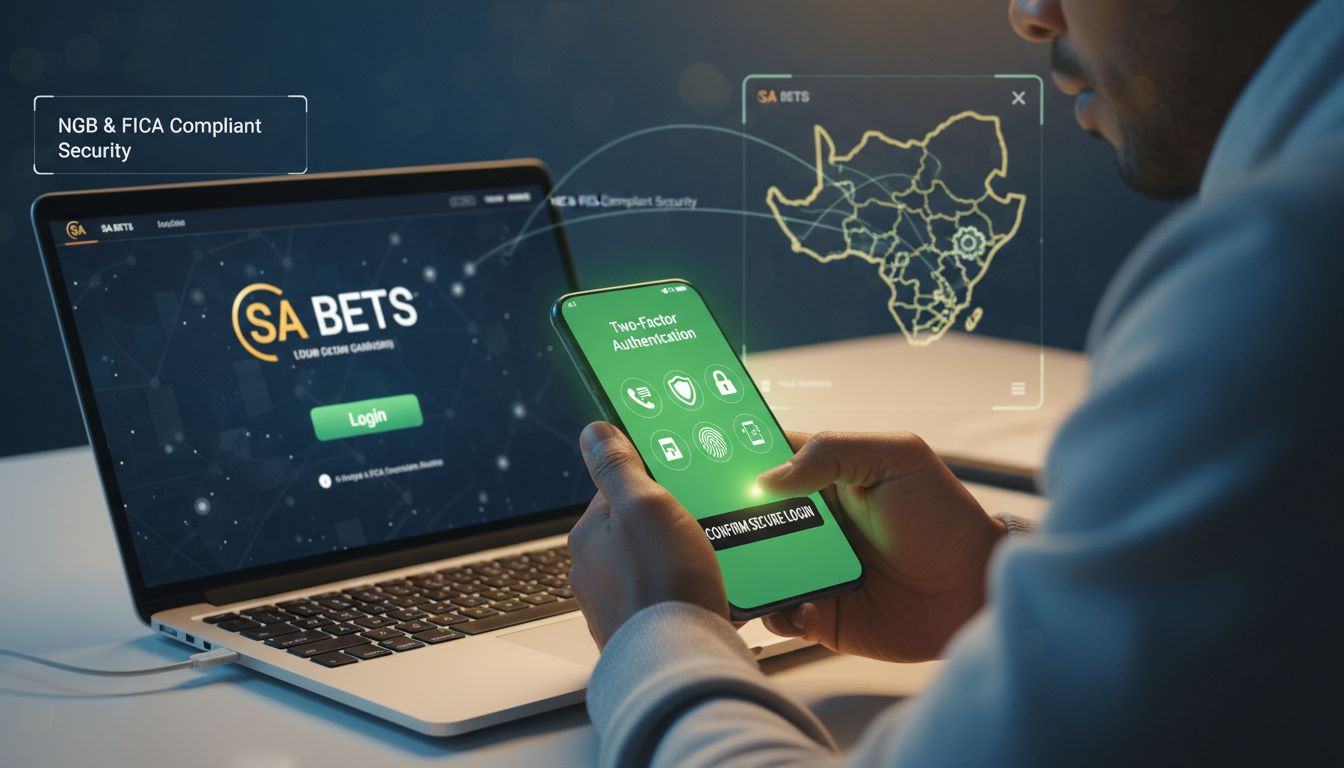
In South Africa’s rapidly evolving online gambling landscape, two-factor authentication has emerged as a critical security measure that protects players from unauthorized access and fraud. With the increasing sophistication of cybercriminals targeting gambling accounts containing significant funds, a simple password is no longer sufficient protection against credential stuffing attacks, phishing schemes, and account takeovers.
The National Gambling Board (NGB) and Financial Intelligence Centre Act (FICA) requirements have made robust account security not just a best practice, but often a regulatory necessity for licensed operators. Modern 2FA implementation offers multiple authentication methods including SMS verification, authenticator applications, push-based notifications, and biometric authentication, each designed to create multiple layers of protection for your valuable gambling accounts.
Understanding Two-Factor Authentication for South African Gambling
Two-factor authentication represents a fundamental shift from single-password security to a layered defense system that requires two distinct forms of verification before granting account access. This security protocol combines something you know (your password) with something you have (your mobile device) or something you are (biometric data), creating a significantly more robust barrier against unauthorized access attempts.
For South African gambling accounts, 2FA serves as essential protection against the unique threats facing online players in the region. The method works by generating time-sensitive codes that expire within 30-60 seconds, ensuring that even if criminals obtain your login credentials, they cannot access your account without physical possession of your authentication device.
The layered security approach mandated by many South African operators integrates seamlessly with existing FICA compliance requirements and Know Your Customer (KYC) verification processes. This integration ensures that account security measures work in harmony with regulatory obligations, rather than creating additional friction for legitimate players.
Modern 2FA implementations on South African gambling platforms typically offer multiple backup and recovery options, recognizing the importance of account accessibility in a region where connectivity and device access can be challenging. The system balances maximum security with practical usability for everyday gambling activities.
Why 2FA Matters for Gambling Accounts
Gambling accounts represent high-value targets for cybercriminals due to the significant funds they often contain and the ease with which stolen money can be withdrawn or transferred. Credential stuffing attacks, where criminals use previously breached username and password combinations across multiple sites, pose a particular threat to players who reuse login information across different platforms.
Phishing attacks specifically targeting South African gamblers have become increasingly sophisticated, with fake emails and websites designed to harvest login credentials appearing virtually identical to legitimate operator communications. Two-factor authentication renders these stolen credentials useless, as attackers cannot generate the required second authentication factor.
Fund protection extends beyond preventing unauthorized withdrawals to include protecting against unauthorized deposits that could implicate account holders in money laundering schemes. Account integrity maintained through 2FA helps ensure compliance with both gambling regulations and broader financial crime prevention requirements under South African law.
South African Regulatory Context
The National Gambling Board has increasingly emphasized the importance of robust account security measures as part of operator licensing requirements, with many provinces now mandating specific authentication protocols for online gambling platforms. Licensed operators must demonstrate that their security measures meet or exceed industry standards, often including mandatory 2FA implementation for accounts above certain deposit thresholds.
FICA integration requirements mean that 2FA setup often coincides with identity verification processes, creating a comprehensive security and compliance framework that protects both operators and players. This regulatory alignment ensures that security measures support rather than complicate legal gambling activities in South Africa.
Types of Two-Factor Authentication Methods
South African gambling platforms offer various 2FA methods designed to accommodate different user preferences, device capabilities, and security requirements. Understanding the strengths and limitations of each approach helps players make informed decisions about their account protection strategy.
The choice of authentication method often depends on factors including smartphone availability, network reliability, and personal security preferences. Most platforms support multiple methods simultaneously, allowing users to switch between options based on circumstances or maintain backup authentication channels.
| 2FA Method | How It Works | Ease of Use | Security Level | Best For |
|---|---|---|---|---|
| SMS Verification | Sends codes via text message | Very Easy | Moderate | Basic smartphones, reliable networks |
| Authenticator Apps | Generates time-based codes offline | Moderate | High | Smartphones with consistent access |
| Push Notifications | Sends approval prompts to device | Easy | High | Frequent users with stable internet |
| Email OTP | Delivers codes to email address | Easy | Moderate | Users without smartphones |
| Biometric Authentication | Uses fingerprint or facial recognition | Very Easy | Very High | Modern devices with biometric sensors |
Choosing the Right Authentication Method for Your Account
Device capabilities play a crucial role in determining the most suitable 2FA method for your gambling accounts. Players with older smartphones may find SMS verification more reliable than app-based solutions, while those with modern devices can take advantage of biometric authentication for enhanced security and convenience.
Network reliability considerations are particularly important in South Africa, where connectivity can be inconsistent in certain areas. Authenticator apps that generate codes offline provide excellent backup options when SMS delivery is delayed or unreliable, ensuring account access remains possible even during network outages.
Backup code importance cannot be overstated when selecting authentication methods. Regardless of your primary 2FA choice, ensure that your selected platform provides downloadable backup codes that can restore account access if your primary authentication device becomes unavailable. Store these codes securely and separately from your primary authentication method to maintain access during emergencies.
Step-by-Step Guide to Enabling 2FA on Major South African Gambling Platforms
Most South African gambling platforms follow similar security setup procedures, though specific interface layouts and terminology may vary between operators. The general process involves accessing account security settings, selecting your preferred authentication method, and completing a verification process to confirm setup success.
Platform differences primarily relate to the range of available 2FA methods and the specific apps or services supported for authentication. While larger operators like Betway and EasyBet typically offer comprehensive 2FA options, smaller platforms may provide more limited choices that still meet security requirements.
Understanding these universal principles allows players to confidently enable 2FA across multiple gambling accounts, regardless of the specific platform interface. The security benefits remain consistent even when setup procedures vary slightly between different operators.
Integration with existing FICA verification processes means that 2FA setup often occurs alongside or immediately after identity document submission and approval. This timing ensures that security measures are in place before significant gambling activity begins on the platform.
Universal Setup Process for 2FA on South African Gambling Accounts
The following steps represent the standard process for enabling two-factor authentication across most South African gambling platforms, though specific interface elements may vary between operators.
- Log into your gambling account using your existing username and password, then navigate to the account settings or security section, typically found in the main menu or profile dropdown.
- Locate the two-factor authentication or security settings option, which may be labeled as “2FA,” “Account Security,” or “Login Protection” depending on the platform.
- Select your preferred authentication method from the available options, considering factors like device compatibility and network reliability for your specific situation.
- Follow the platform-specific setup instructions, which typically involve scanning a QR code for app-based authentication or confirming your phone number for SMS verification.
- Verify your 2FA setup by entering a test code generated by your chosen method, ensuring the system recognizes your authentication device correctly.
- Download and securely store backup codes provided by the platform, as these serve as emergency access methods if your primary authentication device becomes unavailable.
- Test the complete login process by logging out and back in using both your password and the new 2FA method to confirm everything works correctly.
- Update your account recovery information if necessary, ensuring that alternative contact methods remain current in case 2FA recovery becomes necessary.
Platform-Specific 2FA Configuration
Betway and EasyBet typically offer the most comprehensive 2FA options, supporting multiple authenticator apps including Google Authenticator, Microsoft Authenticator, and Authy. These platforms often integrate 2FA setup directly into their FICA compliance workflows, streamlining the security and verification process for new users.
BC Game and other cryptocurrency-focused platforms may emphasize app-based authentication over SMS methods, reflecting the higher security expectations of cryptocurrency users. These platforms often support additional authentication methods like hardware tokens for users requiring maximum security levels.
Setting Up Authenticator Apps for Gambling Accounts
Authenticator applications provide the highest level of security for South African gambling accounts by generating time-sensitive codes directly on your device without requiring network connectivity. These apps use cryptographic algorithms to produce unique six-digit codes that refresh every 30 seconds, creating an extremely secure authentication method.
The setup process involves scanning a QR code displayed by the gambling platform using your chosen authenticator app. This QR code contains encrypted information that links your account to the app, enabling the generation of valid authentication codes. Once configured, the app continues generating codes even when your device lacks internet connectivity.
Popular authenticator options include Google Authenticator for its simplicity, Microsoft Authenticator for enterprise features, Authy for cloud backup capabilities, and 2FAS for open-source transparency. Each app offers slightly different features while maintaining compatibility with standard time-based one-time password (TOTP) protocols used by gambling platforms.
Code generation follows industry-standard algorithms that ensure synchronization between your device and the gambling platform’s servers. The 30-second refresh cycle provides sufficient time for code entry while minimizing the window during which intercepted codes could be misused by attackers.
Recommended Authenticator Apps for South African Players
South African gambling platforms typically accept codes from any TOTP-compatible authenticator app, though some may recommend specific applications for optimal compatibility. The choice between different authenticator apps often depends on individual preferences regarding backup options, user interface design, and additional security features.
| App Name | Platform Availability | Key Features | Cloud Backup | Biometric Lock |
|---|---|---|---|---|
| Google Authenticator | iOS, Android | Simple interface, wide compatibility | Limited | No |
| Microsoft Authenticator | iOS, Android, Windows | Push notifications, enterprise integration | Yes | Yes |
| Authy | iOS, Android, Desktop | Multi-device sync, encrypted backups | Yes | Yes |
| 2FAS | iOS, Android | Open source, extensive customization | Yes | Yes |
Backup Codes and Account Recovery
Backup codes represent the most critical component of any 2FA implementation, serving as emergency access keys when your primary authentication method becomes unavailable. These single-use codes bypass normal 2FA requirements and provide direct account access, making their secure storage absolutely essential for account recovery.
The danger of losing 2FA device access without proper backup planning cannot be overstated, particularly in South Africa where device theft and power outages can suddenly render authentication methods inaccessible. Players who fail to properly store backup codes may find themselves permanently locked out of accounts containing significant funds.
South African gambling platforms typically provide 8-12 backup codes during initial 2FA setup, each designed for single use only. Once a backup code has been used for account access, it becomes invalid and cannot be reused, emphasizing the importance of generating fresh backup codes after any emergency access situations.
Recovery procedures for major South African gambling platforms generally require identity verification similar to original FICA processes, including document submission and sometimes video calls with customer support. This thorough verification protects against social engineering attacks while ensuring legitimate account owners can regain access.
Storing and Managing Backup Codes Safely
- Store backup codes in a dedicated password manager with robust encryption, ensuring they remain accessible even if your primary devices are lost or stolen while maintaining security against unauthorized access.
- Write codes on paper and store them in a physical safe or safe deposit box, providing offline access that remains available during extended power outages or device failures common in some South African regions.
- Create multiple secure copies stored in different physical locations, such as home and office safes, to prevent single points of failure that could leave you without recovery options.
- Never store backup codes in email accounts, cloud storage services, or unsecured documents, as these locations present attractive targets for cybercriminals and may be compromised along with your other accounts.
- Regularly review and update stored backup codes when platforms generate new sets, ensuring your recovery methods remain current and functional when needed.
- Consider sharing backup code locations with trusted family members who can assist during emergencies, while maintaining security through shared safe combinations rather than direct code access.
What to Do If You Lose Access to Your 2FA Device
Contact customer support immediately using the official channels listed on your gambling platform’s website, avoiding any third-party contact methods that could be fraudulent. Prepare to provide detailed account information including recent transaction history, deposit methods, and personal information matching your FICA verification documents.
Identity verification for 2FA recovery typically requires submission of the same documents used for initial account verification, plus additional proof of identity such as recent bank statements or utility bills. Some platforms may require video calls or additional verification steps to prevent social engineering attacks targeting high-value accounts.
Troubleshooting Common 2FA Issues on South African Gambling Accounts
SMS delivery delays represent one of the most common 2FA challenges for South African players, particularly during peak network usage periods or in areas with limited cellular coverage. These delays can range from several minutes to complete non-delivery, making backup authentication methods essential for reliable account access.
Authenticator app synchronization problems typically occur when device clocks become inaccurate or when apps are restored from backups without proper reconfiguration. Time-based codes require precise synchronization between your device and the gambling platform’s servers to function correctly.
FICA verification complications can temporarily block account access even when 2FA is functioning correctly, as platforms may restrict login capabilities during pending verification reviews. Understanding the relationship between identity verification status and account access helps prevent confusion during security setup processes.
Code timeout issues frequently affect users with slower typing speeds or those who need to switch between devices to access authentication codes. Most platforms provide 60-90 second windows for code entry, but network delays or user hesitation can sometimes cause valid codes to expire before entry.
Common Problems and Solutions
| Problem | Cause | Solution | Prevention |
|---|---|---|---|
| SMS not received | Network delays or carrier blocking | Use authenticator app or backup codes | Enable multiple 2FA methods |
| App codes rejected | Device time synchronization error | Sync device clock with network time | Enable automatic time updates |
| Account lockout after failed attempts | Multiple incorrect code entries | Wait for lockout period or contact support | Double-check codes before submission |
| FICA verification blocking login | Pending identity document review | Complete verification process | Submit clear, valid documents promptly |
| Codes expire too quickly | Slow typing or device switching | Prepare codes before starting login | Use push notifications when available |
Security Best Practices for 2FA-Protected Gambling Accounts
Two-factor authentication provides excellent security enhancement but works most effectively when combined with comprehensive security practices including strong password creation, regular account monitoring, and awareness of evolving threat patterns. A holistic approach to account security addresses multiple attack vectors rather than relying on any single protection method.
Phishing awareness becomes particularly important for 2FA-protected accounts, as criminals increasingly target authentication codes through fake websites and fraudulent communications. Understanding how to identify legitimate platform communications versus phishing attempts helps maintain the security benefits that 2FA provides.
Account monitoring and fraud detection capabilities offered by major South African gambling platforms complement 2FA protection by identifying suspicious activity patterns that might indicate compromise attempts. Regular review of account activity helps detect unauthorized access attempts even when 2FA successfully prevents actual account breaches.
Layered security approaches recognize that determined attackers may target multiple aspects of your digital presence, making comprehensive protection across all related accounts and services essential for maintaining gambling account security. This includes securing email accounts, mobile phone accounts, and any other services linked to your gambling activities.
Additional Security Measures Beyond 2FA
- Create unique, complex passwords for each gambling account using a combination of uppercase letters, lowercase letters, numbers, and special characters, with minimum lengths of 12-15 characters to resist brute force attacks.
- Enable account activity notifications for all login attempts, deposits, withdrawals, and other significant account changes, allowing immediate detection of unauthorized access or suspicious activity patterns.
- Regularly review account statements and transaction histories for unfamiliar activity, reporting any discrepancies to customer support immediately to prevent further unauthorized access or fund transfers.
- Use secure networks for gambling activities, avoiding public Wi-Fi for account access and preferring cellular data or trusted private networks that cannot be easily monitored by attackers.
- Keep devices used for gambling updated with latest security patches and antivirus software, as compromised devices can bypass 2FA protection through malware that captures authentication codes.
- Configure automatic logout settings to end sessions after periods of inactivity, preventing unauthorized access if devices are left unattended or fall into wrong hands.
- Maintain separate email addresses for gambling activities to reduce the risk of credential correlation across different services and limit the impact of email account compromises.
Recognizing and Preventing Phishing and Social Engineering
Fake 2FA prompts and credential harvesting attempts specifically targeting South African gamblers have become increasingly sophisticated, often featuring exact replicas of legitimate platform interfaces designed to capture both passwords and authentication codes. Always verify that you are accessing gambling platforms through official websites or mobile apps rather than links received via email or text message.
Operator support contact verification remains crucial when receiving unexpected communications requesting account information or 2FA changes. Legitimate gambling platforms will never request authentication codes via email or phone calls, and any such requests should be treated as fraudulent attempts to compromise your account security.
FICA Compliance and 2FA Integration
The Financial Intelligence Centre Act (FICA) requirements create a comprehensive framework for identity verification that works in conjunction with 2FA security measures to ensure both regulatory compliance and account protection. Licensed South African gambling operators must verify player identities through document submission, address verification, and often supplementary checks before allowing significant gambling activities.
KYC verification processes typically require submission of identity documents, proof of residence, and sometimes proof of income, with 2FA setup often occurring during or immediately after successful verification completion. This integration ensures that security measures are properly configured before players begin significant gambling activities on the platform.
Identity document submission standards under FICA require clear, legible copies of official identification such as South African ID cards, passports, or driving licenses, often supplemented by recent utility bills or bank statements for address verification. Selfie verification may be required to confirm that the person submitting documents matches the identification provided.
Completing FICA Before and After 2FA Activation
Account lockdown during FICA pending status represents a common source of confusion for players who have successfully enabled 2FA but find their accounts restricted pending identity verification completion. Understanding that security setup and regulatory compliance represent separate but related processes helps manage expectations during the verification period.
Withdrawal and deposit restrictions before verification completion ensure compliance with South African money laundering prevention requirements while protecting both players and operators from regulatory violations. These restrictions typically lift automatically once FICA verification reaches approved status, allowing full account functionality with 2FA protection active.